Today’s performance can’t meet tomorrow’s demands. The future can be more productive and profitable than ever—but only if you start planning for it now.
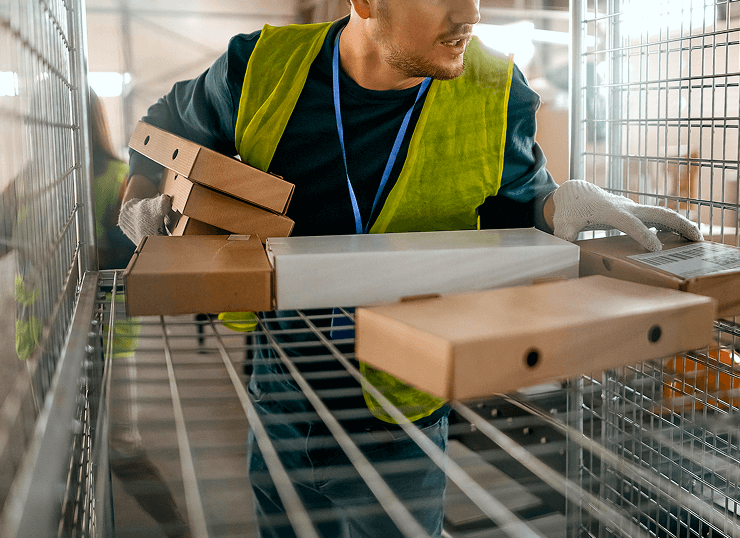
In a tight labor market that’s only getting tighter, automation can step in to absorb the extra volume so shifts stay stable, overtime drops, and temp reliance fades. By taking on the repetitive lifts and risky touches, automation also improves safety and lets your team focus on higher-value work.
Automation helps ease labor challenges by reducing reliance on manual tasks and filling critical gaps in the workforce. By handling repetitive work, it allows teams to focus on higher value activities, improves efficiency, and supports consistent output, enabling businesses to operate smoothly even as hiring and retention remain difficult.
Order cycles are shrinking while item counts and returns keep climbing. Automation sustains high units-per-hour (UPH) and reduces interventions, so accuracy stays up, touchpoints go down, and orders move through the system without stalling.
Warehousing is changing faster than headcount and infrastructure can keep up. Labor is tight, demand is volatile, and many sites are running systems built for another era. Whether you’re absorbing peaks, expanding coverage, or unlocking greater throughput, automation helps leaders adapt to a changing reality.
BG automation absorbs volume so you can stabilize shifts, improve safety, and rely less on temps/overtime. In practice, picking labor can be reduced by up to 70%, while a single Stride operator can now do the work of four people.
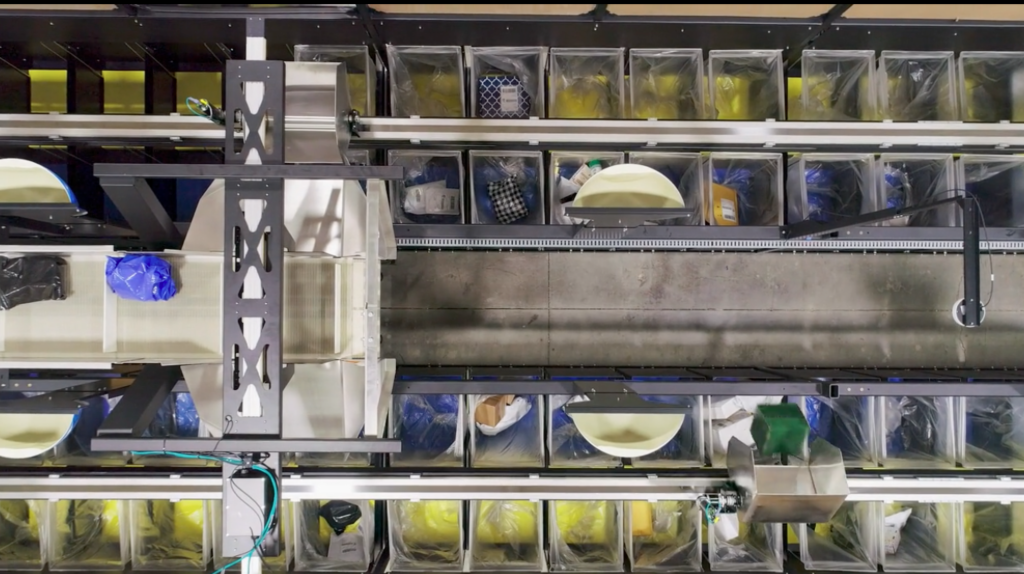
Stash Automated Put Wall sorts and routes returns for put-away fast, cutting touches and getting inventory back to sellable stock.
Our Core cells pick eaches, Stash put wall consolidates BOPIS and ship-from-store orders, and Stride shuttle sorter accelerates store-replenishment waves—so every channel flows.
Stride shuttle sorter drives outbound zone and route sortation, and—through pack/manifest integrations—helps right-size parcels to reduce DIM costs.
Modular cells replicate quickly site-to-site, scale up for peak, and stabilize throughput when plans change.
Vision/ID, scans, and telemetry feed your WMS/WES via standard APIs, delivering real-time visibility and control.
Small-footprint, brownfield-ready modules fit existing layouts and unlock new performance without new buildings.